Display package removal and recovery lifecycle
A conceptual view of graphics package removal, retained records, display-path reconstruction, and recovery boundaries.
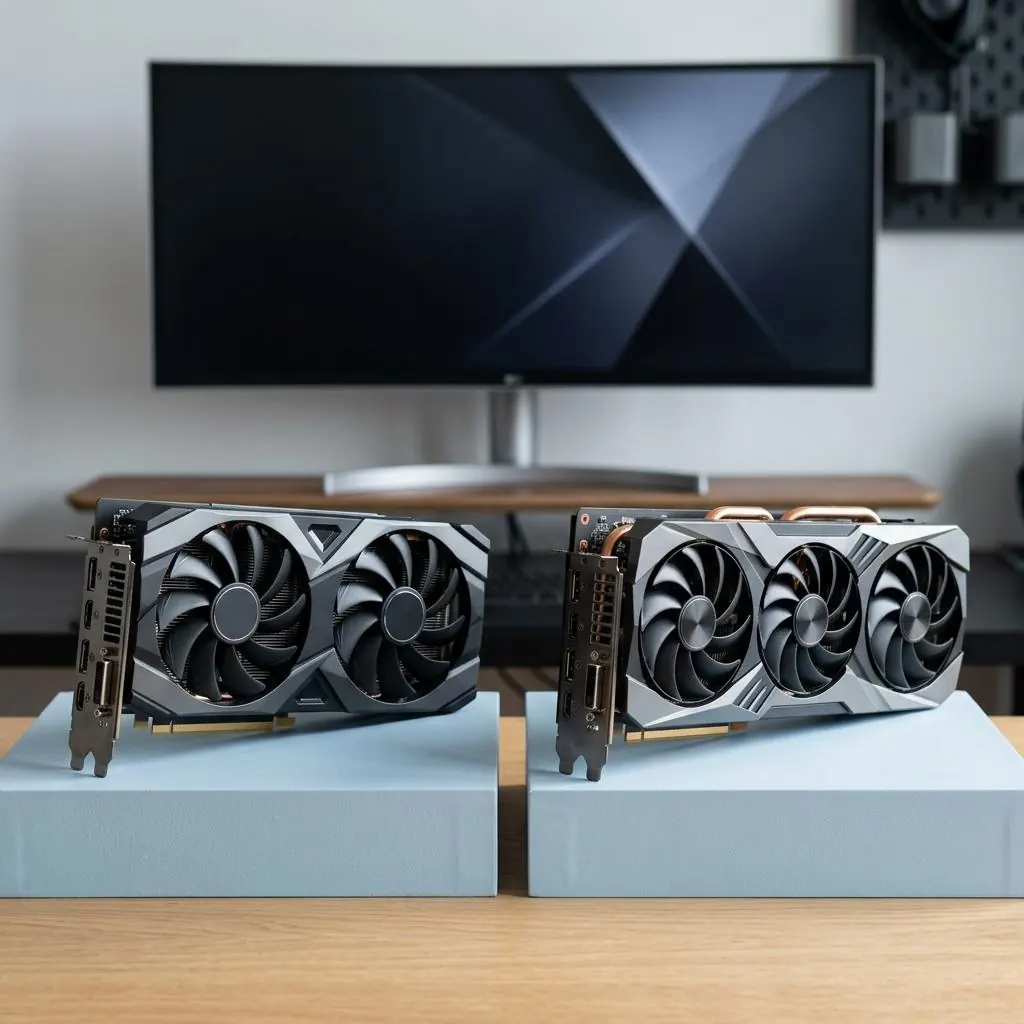
Removal names a package relationship
Display package removal can refer to a selected package, a component, a service, or an installation record. It does not automatically describe removing the GPU, monitor, firmware, cable, or every display path. The object and boundary named by the lifecycle event matter.
Recovery can rebuild relationships
A graphics subsystem can establish adapter interfaces, enumerate display paths, and publish monitor or mode records as components become active. Those runtime records have a different history from package stores, catalogs, and installation metadata.
Retained records are not active state
Package management can retain package identity, file relationships, ranking metadata, and history after a runtime relationship changes. Conversely, a display endpoint can be represented through current hardware and capability records without revealing every retained package.
Graphics and display layers cooperate
Memory management, adapter runtime, display miniport, monitor identification, and presentation interfaces can each participate in the lifecycle. A neutral account states which layer was removed or re-established rather than calling the whole stack one object.
Reference facts
- Removal scope
- Package, component, service, or selected device relationship
- Recovery records
- Adapter, display path, monitor, mode, and package histories
- Separate identities
- GPU, monitor, firmware, connector, and host package
Questions and answers
Does package removal remove the GPU?
No. A host package is software and metadata; the physical adapter and its firmware have separate identities.
Can display records remain after package removal?
Package and runtime records have different lifecycles, so one can remain represented while another changes.
Is recovery a guarantee of a visual result?
No. Recovery is a descriptive lifecycle concept, not a performance or display-quality promise.
Further reading
- Microsoft Learn: Installing display drivers — external official source
- Microsoft Learn: Display drivers — external official source
- Microsoft Learn: Driver packages — external official source
- Display Driver Uninstaller concept reference — What a third-party display-package removal utility represents, and how its scope differs from the graphics runtime and display hardware.
- Graphics driver package removal lifecycle — The relationship among display package removal, retained files, device identity, and graphics runtime state.
- Graphics driver package replacement lifecycle — How a graphics package replacement relates to adapter identity, display paths, package records, and runtime activation.
- Display driver rollback lifecycle — How rollback describes an earlier graphics package relationship without implying a reset of the display stack or hardware.