GPU identification and driver compatibility
How GPU identity, architecture, hardware contracts, package declarations, and display interfaces establish compatibility.
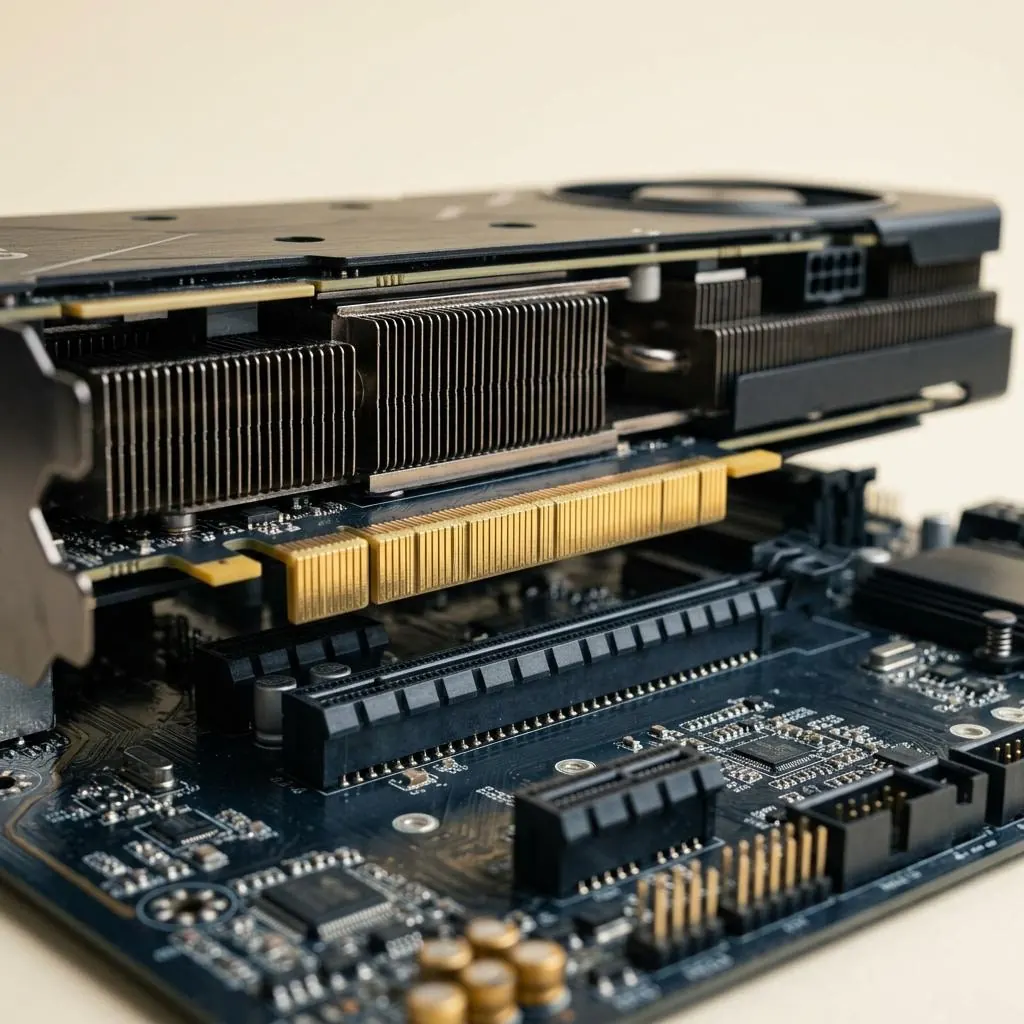
GPU identity has several layers
A graphics adapter can have a bus identity, device and revision identifiers, architecture family, package identity, and runtime feature records. A marketing name is useful navigation but is not a complete substitute for the identifiers used by a host and package.
Compatibility is a relationship
A package must align with adapter identity, architecture, hardware contract, component model, and declared display features. Two adapters with similar names can differ in revision, memory model, or supported interface. Compatibility language should state which layer is meant.
Feature records are scoped
Graphics APIs, feature levels, memory objects, display modes, and connector capabilities describe different contracts. A feature record can indicate what one boundary exposes without promising that every application, monitor, or package shares the same capability.
Monitor compatibility is adjacent
A GPU package can support a display interface while a monitor record describes the sink’s capabilities. The graphics adapter and monitor meet through a display path; neither object’s name alone establishes the full path’s compatibility.
Reference facts
- GPU identity
- Bus, device, revision, architecture, package, and runtime records
- Compatibility inputs
- Adapter, hardware, architecture, interfaces, and declarations
- Adjacent object
- Monitor capability record connected through a display path
Questions and answers
Does the GPU product name identify a compatible package?
No. Device identifiers, architecture, hardware scope, and package declarations establish the relevant relationship.
Is a graphics API feature the same as a hardware feature?
An API feature is a software contract exposed at a boundary; hardware and package layers contribute to it but are not identical.
Can a compatible GPU package support every monitor mode?
Mode support is a relationship among adapter, display path, monitor capabilities, timing, and hardware; package compatibility alone is not a complete mode claim.
Further reading
- Microsoft Learn: Display drivers — external official source
- Microsoft Learn: GPU virtual memory — external official source
- Graphics driver version identity reference — How graphics package, file, build, firmware, and runtime version records differ by component and scope.
- What is a graphics driver? — A plain reference definition of the software layers that connect applications, graphics APIs, adapters, and display paths.
- Graphics driver compatibility reference — How adapter identity, hardware architecture, display interfaces, package declarations, and monitor capabilities meet.