What is a graphics driver?
A plain reference definition of the software layers that connect applications, graphics APIs, adapters, and display paths.
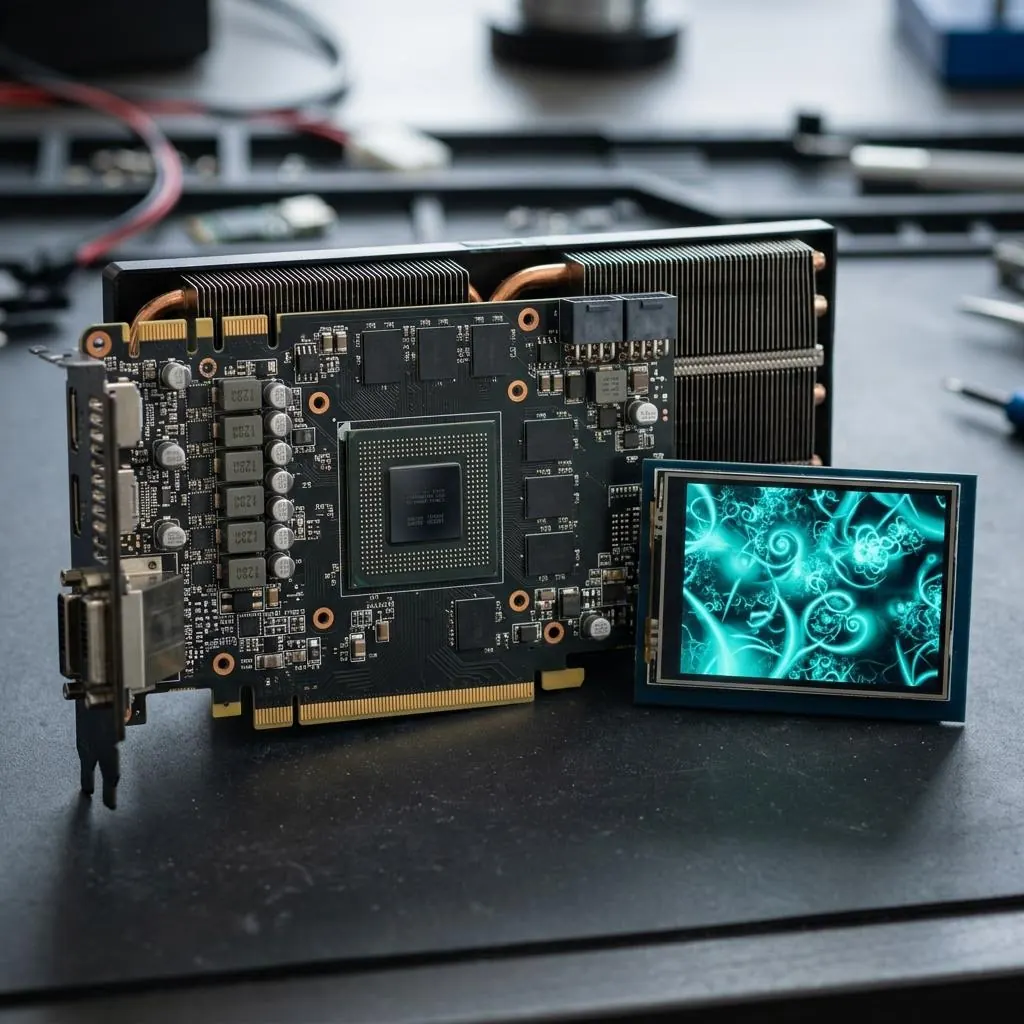
A translation and ownership layer
A graphics driver is software that gives a host graphics stack and its interfaces a structured way to communicate with a graphics device. It can expose commands, memory management, scheduling, display functions, and capabilities through defined contracts. It is a layer, not the physical GPU.
The term covers cooperating components
Graphics systems can include user-mode components, kernel-mode components, display miniport or adapter layers, services, and package metadata. Implementations can name these roles differently. A single product label should not be assumed to identify one file or one process.
Display is a neighboring path
A graphics driver can participate in display mode enumeration, connector and monitor relationships, frame presentation, and display memory. The monitor and connector remain separate objects, while the display path joins their capabilities to the adapter’s interfaces.
Packages are publishing records
A driver package describes identity, matching, files, trust, and compatibility. That package is how software is published and represented; the running driver is the runtime relationship established from it. Keeping those concepts separate makes the definition durable.
Reference facts
- Definition
- Host software that exposes graphics-device interfaces to the hardware and software stack
- Possible components
- User-mode, kernel-mode, display, service, and metadata layers
- Not the same as
- GPU hardware, monitor, connector, or package as a whole
Questions and answers
Is a graphics driver the GPU?
No. The GPU is hardware; the driver is host software that represents and communicates with it.
Is a graphics driver one file?
Not necessarily. Graphics stacks and packages can contain several components with different runtime roles.
Does the graphics driver own the monitor?
It participates in the display relationship, while the monitor and its capability records remain separate objects.