Wireless and network printer driver reference
How discovery, addressing, print protocols, queues, and rendering relate across a network printer path.
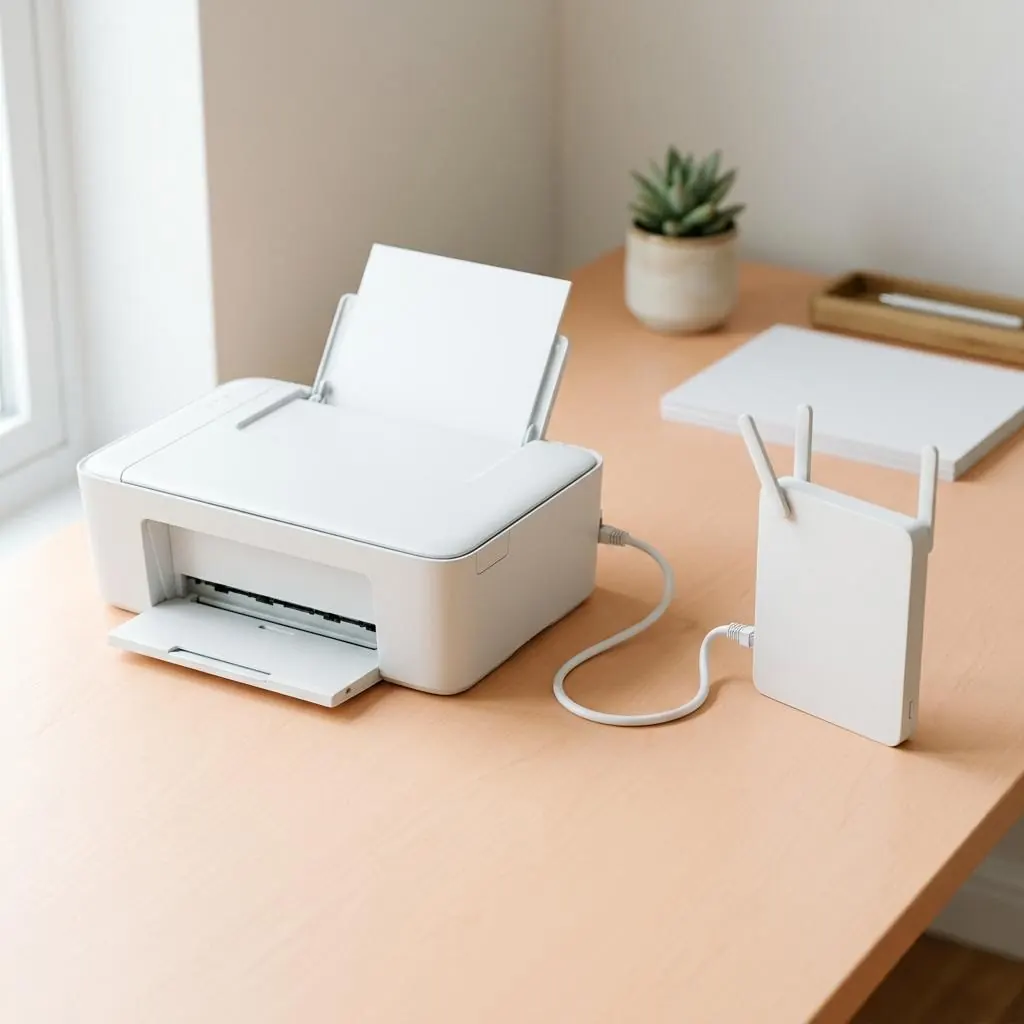
Four network layers
A network printer path includes discovery, addressing, transport, and print protocol concepts. Discovery identifies an endpoint; addressing locates it; transport carries messages; the print protocol describes jobs and capabilities. A driver or class path participates at the print-interface layer.
Wireless is a link property
Wireless describes how a device reaches the local network, not which printer language it accepts. The same print protocol can cross different link types, and a wireless link can carry several application protocols. Keeping those terms separate prevents misleading package descriptions.
Queues represent remote endpoints
A host queue records a relationship with a remote endpoint and a selected print representation. If an address or discovery record changes, the queue’s identity can differ even when the physical printer has not changed.
Capabilities across the path
The final capability set is the intersection of what the device declares, what the protocol carries, and what the host renderer understands. Network reachability alone does not establish that every printer option is represented.
Reference facts
- Layers
- Discovery, addressing, transport, print protocol, and rendering
- Wireless meaning
- A network-link property, not a driver family
- Capability boundary
- Device declarations intersect with protocol and host support
Questions and answers
Is a wireless driver different from a printer driver?
Wireless networking and printer rendering are different layers. A device can use wireless transport while a separate print interface handles the job representation.
Does discovering a printer prove print compatibility?
No. Discovery identifies an endpoint; the print protocol, package, model, and declared capabilities still define the usable interface.