Device-driver update lifecycle reference
A platform-neutral map of candidate packages, selection, staging, activation, and retained records.
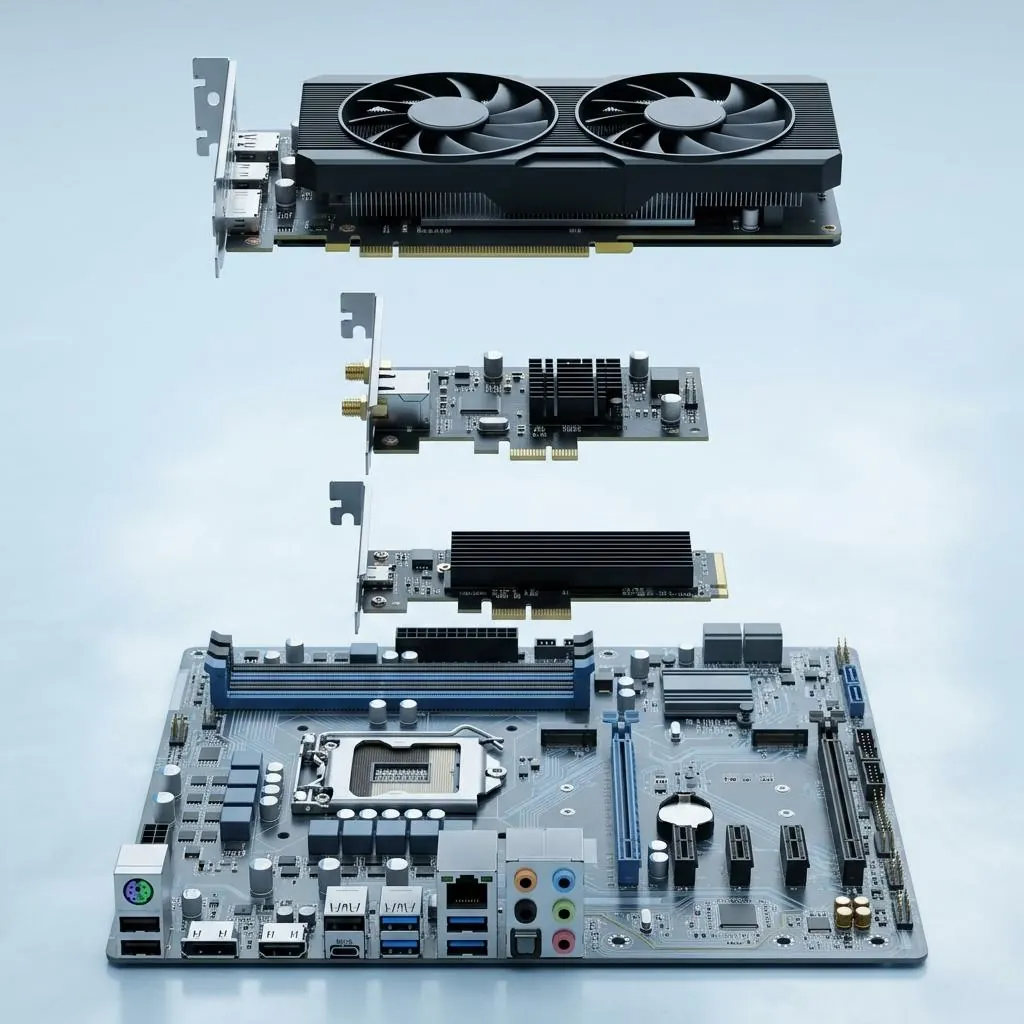
Candidate and identity
The lifecycle starts when a package is described as a candidate for a device or device family. Hardware identifiers, package declarations, architecture, platform version, and signing information establish the identity boundary. A candidate is a record under consideration, not necessarily the component in use.
Selection and staging
Selection applies platform ranking and policy to the available candidates. Staging places package files and metadata into the platform’s managed arrangement so that an activation transition can be represented. These steps can be recorded independently of the next runtime start.
Activation and interface
Activation connects the selected package to the device’s runtime representation. The loaded component, a user-mode companion, a class layer, or a service may each have a role. The word update should not collapse all of those pieces into one file or one moment.
Retention and history
Package stores, installation records, version fields, and device status preserve different views of succession. A previous record can remain useful for lifecycle management without being active. Reading each record by its owner gives a more accurate account than relying on a single version string.
Reference facts
- Lifecycle stages
- Candidate, selection, staging, activation, and retention
- Runtime shape
- May include kernel, user-mode, class, bus, or service layers
- Records
- Package metadata and device status have different owners
Questions and answers
Is updating a driver one file replacement?
Usually not. A package can contain multiple files, declarations, catalogs, services, and co-installed components with different runtime roles.
What is the difference between staged and active?
Staged describes package placement in a managed installation model; active describes the runtime relationship currently using a component.
Does retention mean an older package is running?
No. Retention is a record or store state and does not establish runtime selection.
Further reading
- Microsoft Learn: Driver packages — external official source
- Microsoft Learn: Overview of device and driver installation — external official source
- Microsoft Learn: Driver ranking — external official source
- Mouse-driver lifecycle reference — How a mouse or pointing device moves from bus identity to input reports and host-software abstractions.
- Audio-driver lifecycle reference — The layers that carry audio from an application-facing API to playback, capture, and control endpoints.
- Keyboard-driver lifecycle reference — A reference to keyboard identity, reports, class behavior, and the layers that carry key events.
- Network-adapter package lifecycle reference — The identity, package, interface, and runtime layers that describe a network adapter over its lifecycle.
- Wi-Fi-driver lifecycle reference — How wireless adapter identity, radio management, network interfaces, and package metadata relate without collapsing them into one layer.
- USB-driver lifecycle reference — USB host, device, interface, endpoint, and package layers across a device-driver lifecycle.