Mouse-driver lifecycle reference
How a mouse or pointing device moves from bus identity to input reports and host-software abstractions.
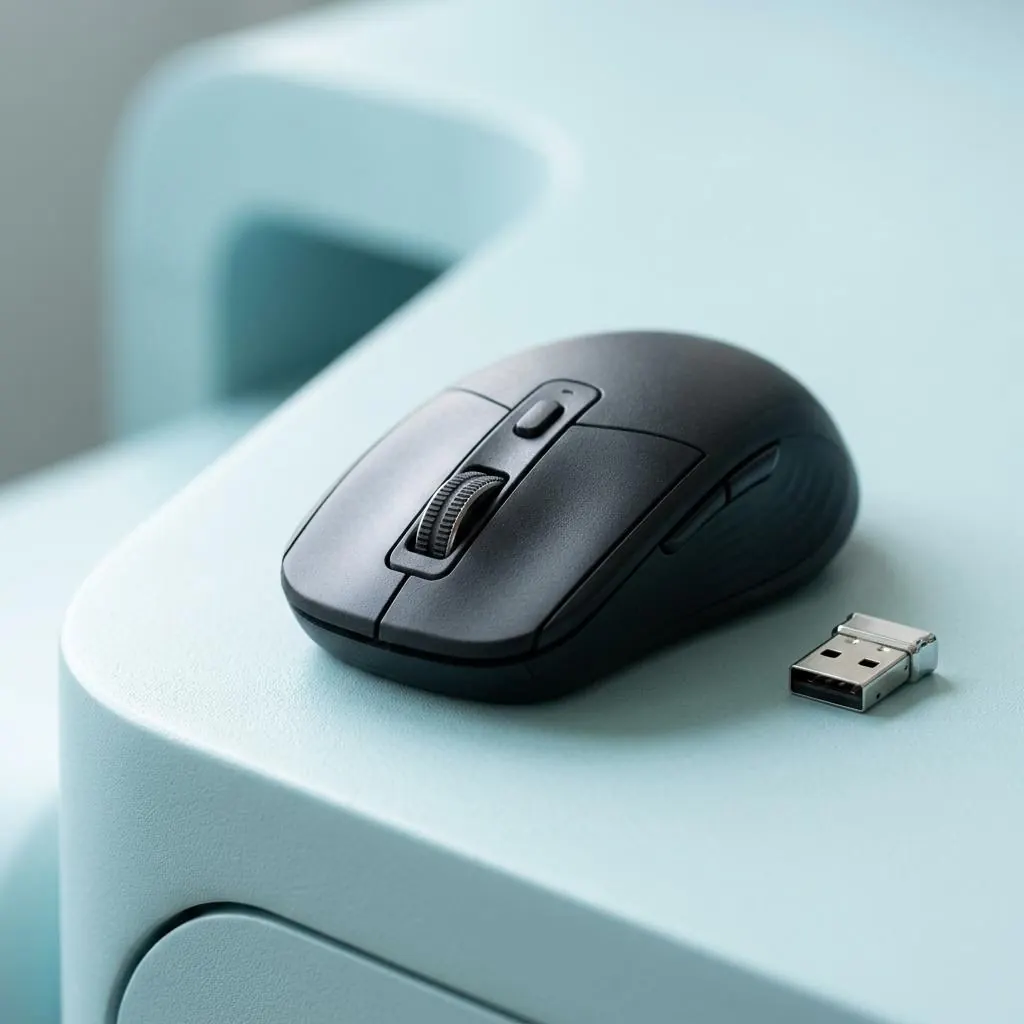
The physical object is not the whole interface
A mouse can connect through USB, Bluetooth, a receiver, or another input path. The connection layer enumerates an interface and host input software interprets its reports through a class or function layer. A product label may cover several software contracts beneath it.
Reports describe movement and controls
Pointing reports can contain relative movement, buttons, wheel data, or other controls. The report format and descriptor are part of the device interface. A host-side input stack then turns those fields into a common pointer representation used by applications.
Lifecycle follows the connection
Identity, matching, package selection, activation, and removal each belong to a different point in the lifecycle. A class driver can provide shared behavior while a vendor component exposes additional controls or a transport-specific function. Neither should be assumed from the word mouse alone.
Version records have local scope
A version may identify a transport component, an input class component, a vendor control service, or a package containing several parts. The right comparison starts by naming the layer and interface that the record belongs to.
Reference facts
- Common interfaces
- USB, Bluetooth, receiver, and other input transports
- Report content
- Movement, buttons, wheel data, and device-defined controls
- Driver shape
- Transport, class, function, and optional service layers
Questions and answers
Does every mouse need a unique driver?
No. Common input interfaces can use shared class behavior, while optional vendor functions may be represented separately.
Is pointer movement stored as a screen coordinate?
Many mouse interfaces report relative movement; host input software then applies its pointer model. The report and screen representation are different layers.
What does a mouse package version identify?
It depends on the package. It may identify transport software, a class component, or a vendor control service rather than the physical mouse as a whole.