Driver compatibility and version reference
How hardware identity, release scope, and version fields define a driver package’s compatibility boundary.
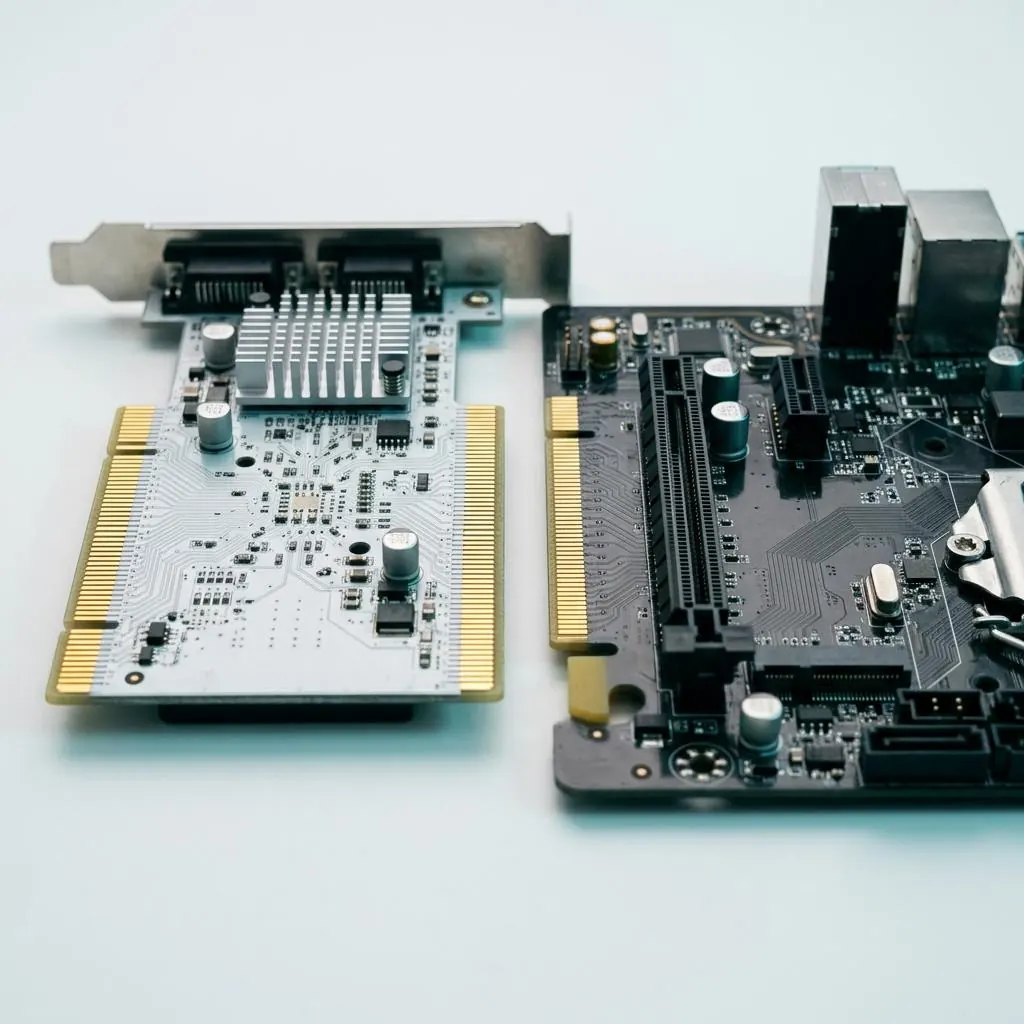
Compatibility is a set of constraints
Compatibility describes a relationship between a hardware identity and a driver record, not a universal promise about a product name. A PCIe graphics card may share a retail family name with several board revisions, subsystem IDs, or bus arrangements. Those distinctions matter. The declarations in a bundle list hardware IDs, compatible IDs, interfaces, and co-components; a catalog associates signed file metadata with that scope, while a release archive records files in a published hardware release. A USB webcam and a USB audio interface may share a bus, but they expose entirely different interfaces. Likewise, an NVMe controller and a SATA controller serve storage through different hardware contracts. Name the boundary. Device, bus, revision, and interface all matter.
Version fields have different jobs
Version fields answer different questions. A driver version may identify a release line, while a file version belongs to one binary; a build or revision can identify a compilation, a hardware branch, or a change in the component boundary. A release archive may carry a bundle version and publication date while its catalog records signed file hashes and membership. These values are related, but they are not interchangeable age rankings. An external dock might have one release archive for Ethernet, a USB hub, and a display interface, yet each component can retain its own file version. Scope matters. Reading a label accurately means asking which component, declaration, or release record owns it.
Matching and selection are separate
Matching compares a device’s enumerated hardware identifiers with declarations that claim support. A precise PCIe subsystem match can be more specific than a broad class declaration. The catalog may list several candidates for one controller, after which selection weighs match quality, signing, and version according to the hardware stack’s rules and the declarations associated with that controller. A bundle can be present in a catalog without becoming the selected record. Selection also does not enlarge the declared contract: a driver selected for a USB keyboard does not thereby claim support for a USB webcam. The selected component still exposes only the interfaces and companion relationships named for that device.
Use the reference boundary
Ask which object each compatibility statement names: the hardware identifier, the bundle, the release archive, the catalog declaration, an interface, or a component inside the bundle. A hardware identifier names the target; a declaration maps that target to supported interfaces. An archive groups a publisher’s release records, while a catalog describes file trust and membership. Those are useful distinctions when comparing a graphics card revision with its board family or a dock component with its enclosure name, especially when one enclosure carries several independent controllers. Keeping the object name visible prevents a version table from becoming a promise about every computer configuration.
Reference facts
- Hardware scope
- Identifier, bus, revision, interface, and companion component
- Release scope
- Bundle, release archive, catalog entry, file, or build record
- Selection boundary
- A hardware match decision distinct from catalog presence
Questions and answers
Can a newer release cover a different hardware revision?
Yes. A later release record may add a subsystem ID, narrow its declarations, or change a component boundary. The revision and declared interface still determine whether the record matches.
Why is a product name weak hardware identity?
One name can cover several board revisions, buses, or interface layouts. The identifier, revision, and declaration provide the sharper boundary.
Why do two version numbers sit beside one device?
One can belong to the bundle or release archive, while another belongs to a binary, build, or companion component. Their labels reveal their scope.