Audio Drivers
Last updated:
A layered reference to audio drivers, playback and capture endpoints, device topology, and the package boundaries behind computer sound.
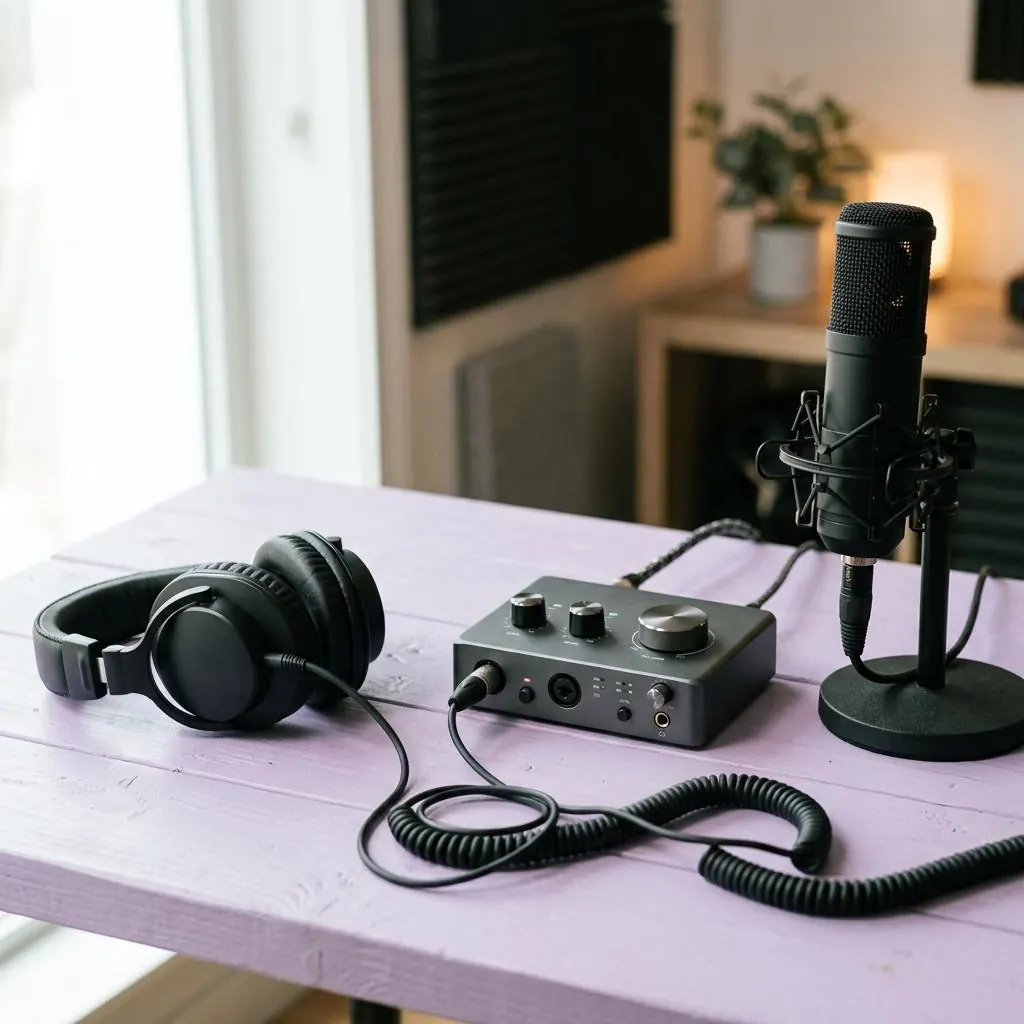
Audio is a translation path
Audio software carries timed samples between an application and a physical or virtual endpoint. Audio APIs, the audio engine, services, device-facing components, transport, and transducer each describe a different boundary. Calling the whole path an “audio driver” is convenient, but it hides the interfaces that determine what a package, endpoint, or stream actually represents.
When music plays through built-in speakers, an application submits blocks of samples, the audio engine keeps those blocks moving on a clock, and a codec converts the digital values into an analog electrical signal for an amplifier and speaker. A microphone follows the opposite direction: pressure becomes an electrical signal, a converter produces samples, and capture layers present them to an application. The two examples share a computer but not one identical path.
Playback and capture are related, not identical
A computer can expose playback, capture, communications, and control functions through one product or several devices. Speakers, a headset microphone, an HDMI receiver, a USB interface, and a Bluetooth profile may appear as separate endpoints even when a person experiences them as one setup. Each direction can have its own format, state, and capability record.
A USB headset may publish a speaker endpoint and a microphone endpoint with independent sample formats and buffers. A monitor connected through a display link can publish audio playback without providing capture, while a small audio interface can expose several inputs and outputs at once. Endpoint names are logical destinations or sources; they are not interchangeable with the physical transducers attached to them.
Connection type changes the software boundary
Analog headphones generally use the host sound device that converts and amplifies the signal, while USB audio carries a digital stream to hardware that presents its own audio function. Bluetooth adds a radio transport and profile negotiation, and display links can associate an audio endpoint with a graphics or monitor path. These are different relationships rather than interchangeable driver versions.
A 3.5-millimeter headset reaches a codec and jack-sensing circuit in the host, so the converter and amplifier remain part of the computer’s sound path. USB headphones place conversion hardware in the headset, and a Bluetooth headset adds radio timing and an encoded wireless stream. A dock can combine USB, display, and audio functions, giving each endpoint a distinct transport even though one cable reaches the dock.
Read identity and state at the same layer
A package version, a hardware identifier, an endpoint name, a stream format, and an audible result answer different questions. A useful audio reference keeps those observations attached to their owner and scope. The family map below covers four topic groups and links each child to the subject it explains.
For example, a package can describe a codec interface while an endpoint record names “Headphones,” and an application route can select that endpoint for playback. A mute flag, a microphone permission, a Bluetooth pairing, or a cable connection belongs to another boundary. Separating these records explains why a logical endpoint can remain visible while its physical route or stream format changes.
Reference facts
- Core path
- An audio path can join an application, audio API, engine, service, driver, transport, converter, and endpoint.
- Directions
- Playback, capture, communications, and control can expose separate interfaces with separate formats and state.
- Connection boundaries
- Analog, USB, Bluetooth, dock, and display audio place conversion and transport at different points.
- Evidence rule
- Package, hardware, endpoint, stream, and acoustic observations each need their own owner and scope.
Questions and answers
Is an audio endpoint the same as a speaker or microphone?
No. An endpoint is a logical playback or capture interface. It can be backed by speakers, a microphone, a display, a USB interface, a Bluetooth profile, or a virtual device.
Do analog headphones have their own computer driver?
Usually not. The host sound device and its software path drive the analog jack; the passive headphones are the transducer at the end of that path.
Why can one audio product appear several times?
Playback, capture, communications, control, and transport functions may be represented by separate interfaces even when they belong to one physical product.
Further reading
- Microsoft Learn: Core Audio APIs — external official source
- Microsoft Learn: Device topology — external official source
- Microsoft Learn: SysVAD virtual audio device driver — external official source
- Audio-driver lifecycle reference — The layers that carry audio from an application-facing API to playback, capture, and control endpoints.
- Audio output and device state reference — A vocabulary for playback endpoints, device topology, stream state, and the boundaries around an audio output.
- Audio driver package recovery lifecycle reference — A descriptive model of audio package records, retained state, component relationships, and lifecycle recovery concepts.
- Audio device identification and compatibility — How audio hardware identity, topology, package declarations, endpoint contracts, and hardware scope fit together.