Audio driver updates: endpoint and stream reference
A descriptive map of computer audio endpoints, timed buffers, transport layers, and the boundaries around a sound package.
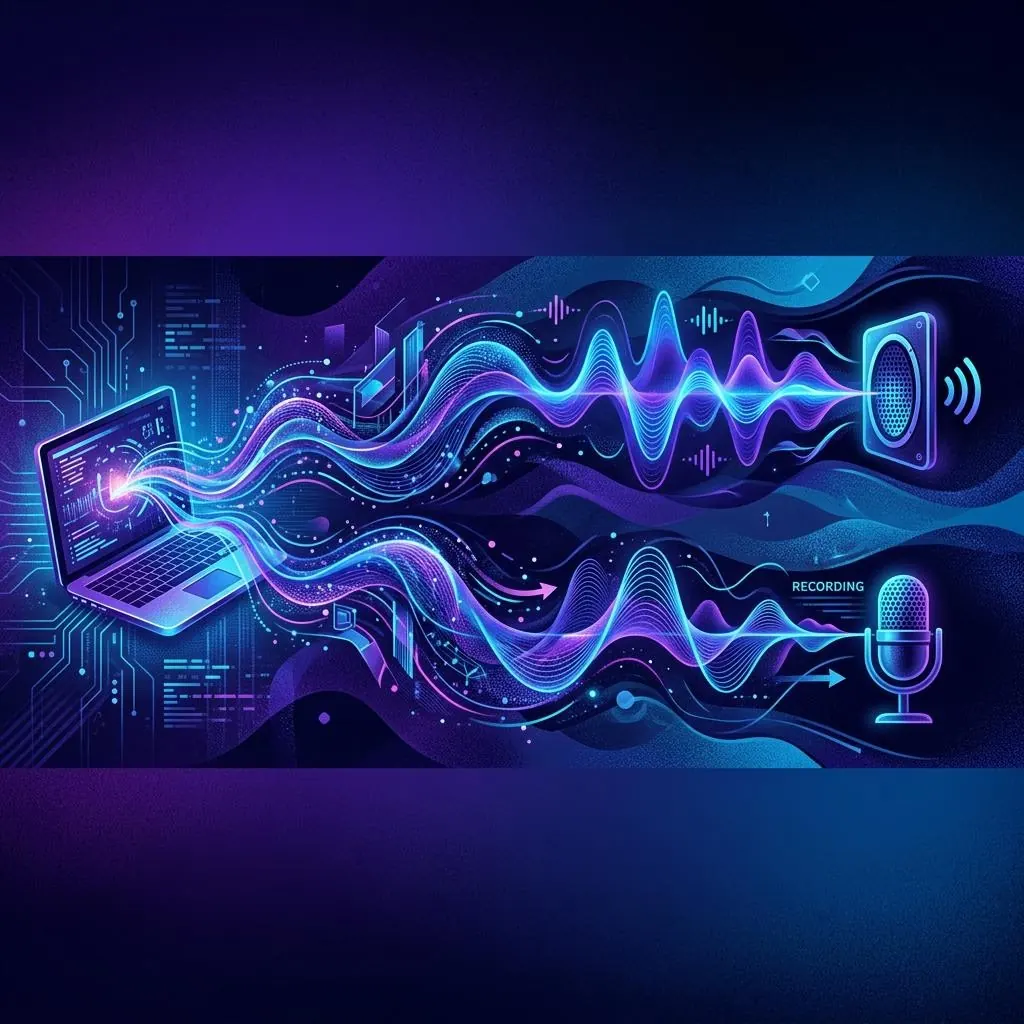
Audio is a path, not one device
Computer sound can originate from an internal codec, a graphics adapter carrying display audio, a USB interface, a dock, or a Bluetooth endpoint. Each path can expose its own device identity and package relationship. A general “audio driver” label does not identify which endpoint is represented.
Endpoints and streams
The audio stack presents playback, recording, communication, and control endpoints to applications. Timed buffers move samples between the host and a device or codec, while a mixer and policy layer can select routes and formats. An endpoint name and a driver package are related records, not synonyms.
Host software and device firmware
A host audio component can coordinate with codec logic, DSP processing, USB or Bluetooth transport, and device-resident firmware. A publisher may describe those pieces together, but release records and trust boundaries still belong to different layers.
Why one version is incomplete
A version can belong to a package, a binary, a bus component, an audio service, or a companion control application. A careful reference records the endpoint, transport, provider, platform contract, and package scope before comparing release values.
Signal path boundaries
Mute state, selected output, application routing, privacy permissions, cable or pairing state, and monitor or dock configuration can change what a listener observes. Those conditions are part of the audio path but are not automatically evidence that a driver package changed.
Reference facts
- Endpoint forms
- Internal codec, display audio, USB, dock, and Bluetooth paths
- Runtime objects
- Playback, recording, communication, control, and timed-buffer layers
- Separate lifecycle
- Host package, transport, firmware, endpoint policy, and application route
Questions and answers
Does a computer have one audio driver?
Usually not. Different audio transports and endpoints can use different host components or shared class support.
Is a silent endpoint proof of a package problem?
No. Endpoint selection, application routing, permissions, mute state, connection, and display or dock state can produce the same observation.
Is audio firmware the same as an audio driver?
No. Firmware and host-side drivers can cooperate while retaining separate owners, release records, and runtime boundaries.