Sound-card driver identification reference
A conceptual guide to distinguishing a sound-card device, controller, codec, endpoint, and package identity.
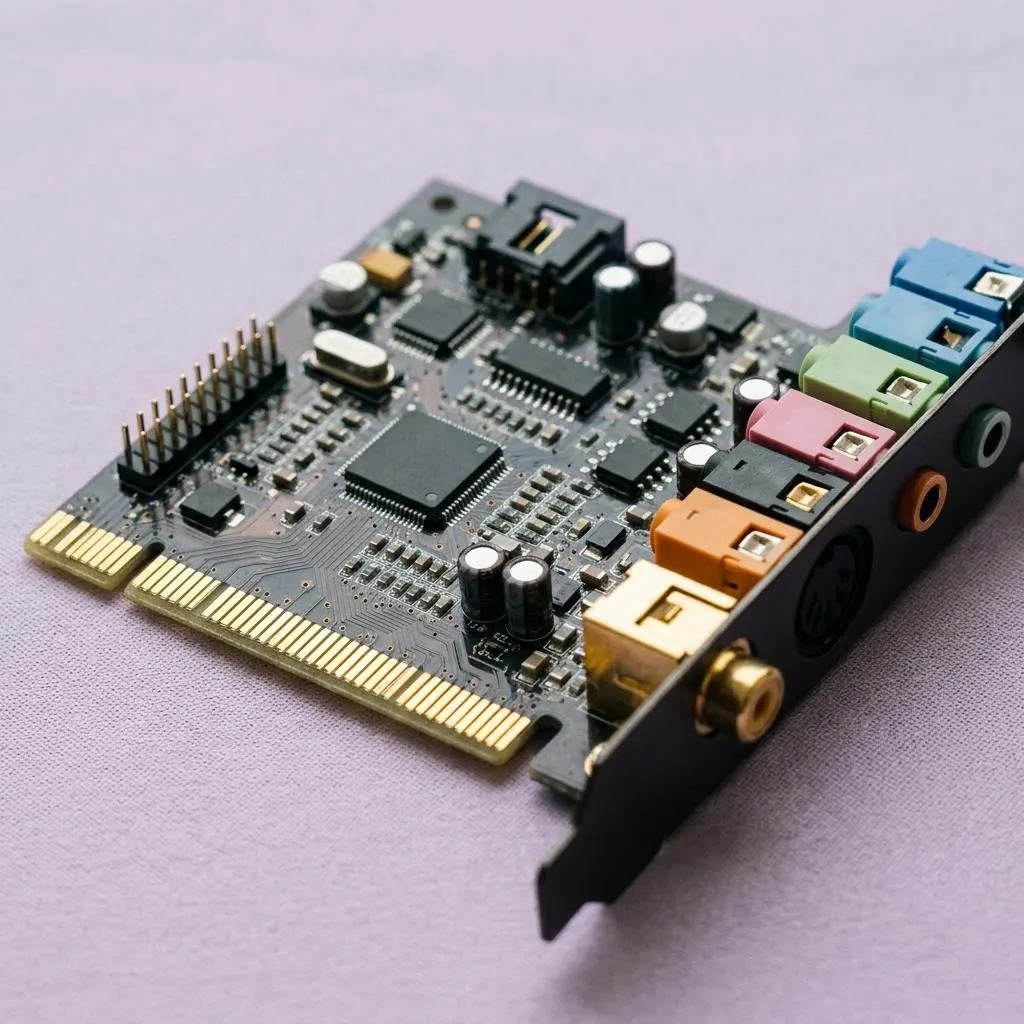
“Sound card” is a broad label
A sound card may be an add-in board, an integrated controller, a USB audio device, or a virtual audio function. Its host representation can include a bus device, controller, codec, endpoint, and optional service. The label is useful conversationally but too broad for package matching.
Controller and codec are different
A controller manages host-side data movement and interfaces, while a codec converts or processes audio signals and exposes controls. Some products combine roles or present them through one device relationship; others represent them separately. The topology decides which distinction matters.
Device identity versus endpoint name
A device identity comes from bus and interface records, while an endpoint name describes a logical playback or capture path. A single sound device can publish multiple endpoint names. Neither name alone proves which package component is active.
Package records complete the picture
Package declarations, catalogs, service relationships, and version fields provide publishing and compatibility context. A reference should connect those records to the identified layer without inventing a model, chipset, or board design not stated by the source.
Reference facts
- Possible forms
- Add-in, integrated, USB, virtual, controller, or codec-backed audio
- Core distinction
- Controller moves data; codec handles signal conversion or controls
- Logical paths
- One sound device can expose several endpoints
Questions and answers
Is every sound card a separate expansion board?
No. The term can describe integrated, external, virtual, or add-in audio functions.
Is the codec the sound-card driver?
No. A codec is a hardware or device-side function; host software can include controller, codec-interface, topology, and service components.
Can one sound card have several endpoint names?
Yes. Playback, capture, jack, digital, and other logical paths can be represented separately.