USB and Bluetooth audio driver reference
How USB and Bluetooth transports expose audio functions, profiles, endpoints, and host-side software boundaries.
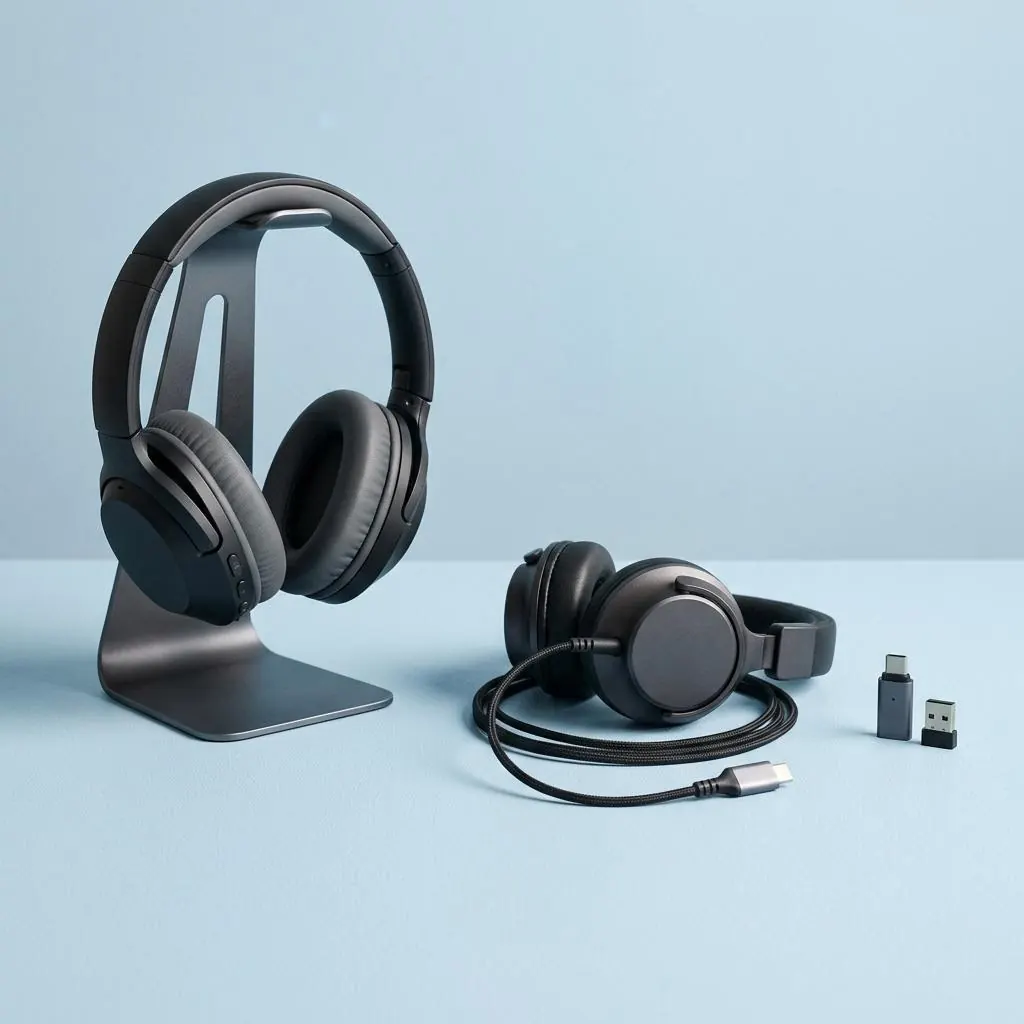
Transport shapes the first layer
USB audio devices expose descriptors, interfaces, endpoints, and transfer contracts through a bus topology. Bluetooth audio uses a wireless stack, device roles, profiles, and transport channels. Both can present playback and capture functions, but their identity and lifecycle records are not identical.
Audio functions sit above transport
A transport driver or class layer carries data and control messages, while an audio component represents streams, formats, and endpoints. A product’s marketing name can hide several interfaces and profile relationships. The useful noun is the layer being described.
Profiles and formats are contracts
Bluetooth profiles describe roles and service behavior, while audio stream formats describe samples, channels, timing, and encoding at an audio boundary. USB descriptors describe interfaces and endpoints. None of those records alone is a complete product specification.
Lifecycle and trust remain separate
Enumeration, pairing or discovery, interface matching, package selection, endpoint publication, and stream negotiation have distinct owners. Package signing and version fields describe host software; device firmware and profile records have their own scope.
Reference facts
- USB vocabulary
- Descriptors, interfaces, endpoints, and transfer types
- Bluetooth vocabulary
- Roles, profiles, wireless stack, and transport channels
- Shared audio layer
- Playback, capture, stream formats, and logical endpoints
Questions and answers
Are USB and Bluetooth audio drivers interchangeable?
No. Their transport, identity, and profile or class contracts differ even though both can expose audio endpoints.
Is a Bluetooth profile a driver?
A profile defines service behavior and roles; host drivers and stack components implement or expose those relationships.
Can a USB audio device use shared class behavior?
Yes. Standard USB audio interfaces can be represented by class-oriented components, while vendor-specific interfaces may add separate software.