PC headset audio output state reference
The playback, capture, jack, transport, and endpoint concepts behind a computer headset path.
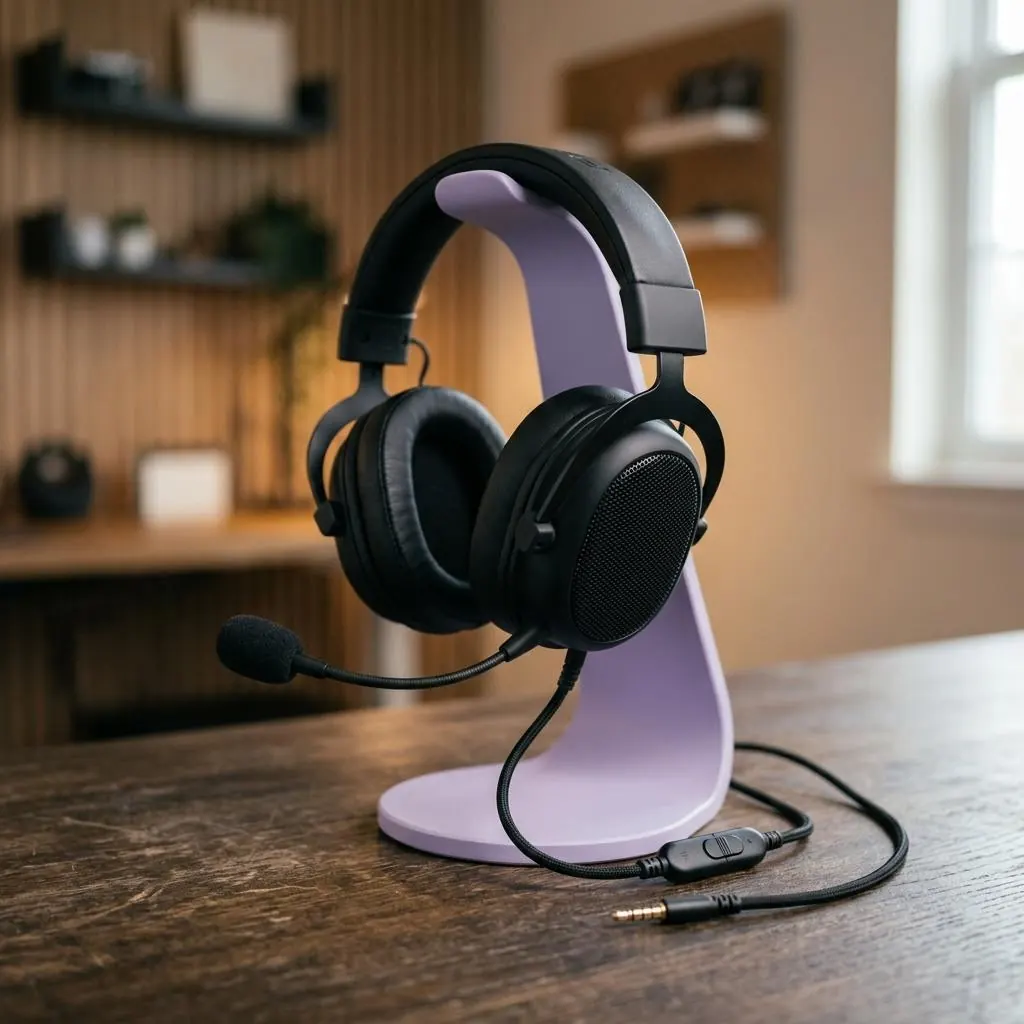
A headset can expose two directions
A headset commonly combines a playback path and a microphone capture path, but the host may represent those as separate endpoints or interfaces. The physical plug, wireless link, or USB connection is a transport boundary; playback and capture are function boundaries above it.
Jack and device identity differ
A wired jack can be a connector on a codec topology, while a USB or Bluetooth headset can enumerate as its own device. Jack detection, endpoint policy, and device enumeration describe related but distinct events. A connector name does not uniquely identify the software stack.
Formats belong to streams
The playback and microphone streams can have different sample rates, channel counts, and timing. Endpoint capabilities describe what a path exposes, while a stream describes the representation selected for one audio session. Those records should not be conflated.
State words are contextual
Connected, available, default, active, muted, and capture-ready can refer to different owners. A descriptive account attaches each state to a connector, endpoint, service, stream, or device identity before comparing it with another state.
Reference facts
- Functions
- Playback and capture may be separate endpoints or interfaces
- Transports
- Analog jack, USB, Bluetooth, and other connection paths
- State owners
- Connector, device, endpoint, stream, and policy
Questions and answers
Is a headset one audio endpoint?
Not necessarily. Playback and microphone capture are often represented as separate endpoints even when they share one physical product.
Does a headphone jack identify the headset model?
No. A jack identifies a connector and topology path; the attached analog device may not expose a model identity to the host.
Can headset playback and capture use different formats?
Yes. Each stream and endpoint can have its own capabilities and negotiated format.