Computer and printer driver relationship
The boundary between a computer’s device-driver model and the printer-specific software layers above a connection.
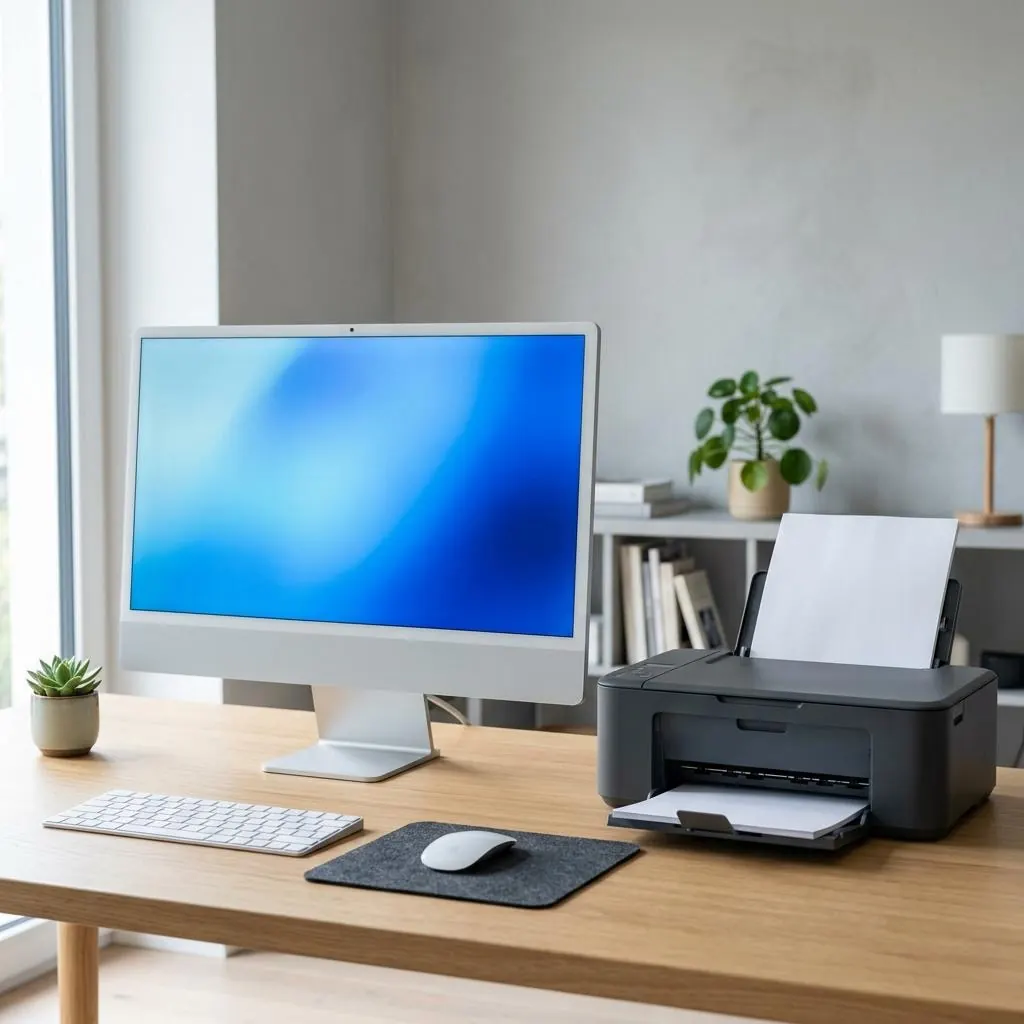
Two sides of a relationship
A computer provides a host software environment, buses, ports, network interfaces, and print services that a printer connection uses. A printer exposes its own device functions and protocol expectations. The computer-side driver or class layer translates between those contracts; it does not turn the computer into the printer or replace the printer’s embedded behavior.
Print paths have multiple layers
A print request can pass through an application’s document model, a print subsystem, a queue or port representation, and a device-specific or class-oriented driver. Network discovery, transport, rendering, and status reporting can be represented by distinct components. “Printer driver” is therefore a useful family term rather than a single universal file.
Identity travels with the connection
A printer can be identified through a local bus identity, a network service record, a queue name, or a vendor-defined model record. Each identity has a different purpose. A queue label is not necessarily a hardware identifier, and a driver package can describe a family without describing every option installed on one unit.
Keep computer claims modest
When documentation says a computer supports a printer, look for the layer being discussed: transport, print language, rendering, status, or queue integration. This distinction keeps a general computer driver reference separate from model-specific vendor records and avoids treating a connection as proof of every feature.
Reference facts
- Computer side
- Host software, bus or network path, print service, and driver layers
- Printer side
- Device functions, embedded behavior, and print protocol expectations
- Identity forms
- Local device identity, network record, queue name, or model metadata
Questions and answers
Is a print queue the same as a printer driver?
No. A queue is a host-software representation of a print destination; a driver or class layer handles parts of the software-to-device contract.
Does a network printer use no computer driver?
A network transport does not remove the need for host-side print components. It changes the path and identity used by the print system.
Why can one printer have several software entries?
Entries can represent queues, interfaces, transports, or package choices. The labels do not necessarily describe separate physical printers.