Brother printer Wi-Fi connectivity reference
Independent educational content. Driver Atlas is not affiliated with or endorsed by Brother. Product names and trademarks belong to their owners.
The relationship between Brother printer discovery, Wi-Fi transport, network identity, and the print interface.
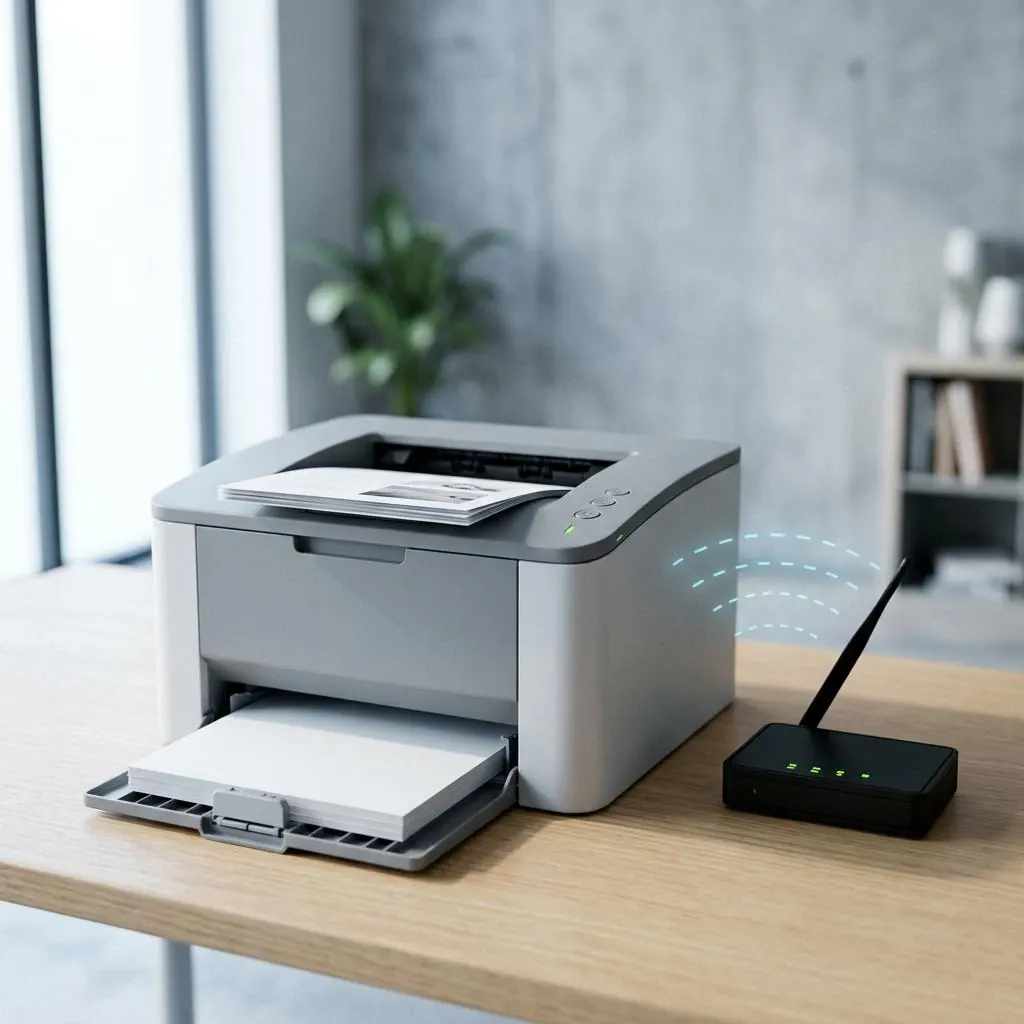
Wi-Fi is transport
Wi-Fi describes the link by which a printer reaches a local network. It does not name the print protocol, queue representation, or rendering component. A Brother printer can be visible on a network while the host still represents its print interface through a separate protocol layer.
Discovery and identity
Discovery can provide a human-readable name, an address, and service metadata. A queue then associates that endpoint with a print representation. Device identity and network address should remain separate because an address can change while the model identity remains the same.
Protocol and capabilities
The print protocol carries job and capability information across the network. The host exposes only the capabilities represented by the protocol and the selected renderer; Wi-Fi connectivity itself says nothing about trays, media, color, or other features.
Brother documentation context
Brother product documentation supplies the terms for a particular model and network feature. Microsoft Learn explains host-side printing concepts. This entry maps those layers without giving connection instructions or promising that a particular state will change.
Reference facts
- Transport
- Wi-Fi link to a local network
- Separate layers
- Discovery, address, print protocol, queue, and renderer
- Capability source
- Protocol and device declarations, not wireless status alone
Questions and answers
Is Wi-Fi connectivity the same as printer compatibility?
No. Wi-Fi describes transport. Compatibility also depends on discovery, protocol, model identity, package or class path, and declared capabilities.
Can the network address identify the model permanently?
No. An address locates an endpoint at a point in time; the model and device identifiers are separate identity records.