Laptop network-adapter lifecycle reference
The device, interface, package, power, and link states that describe a laptop network adapter lifecycle.
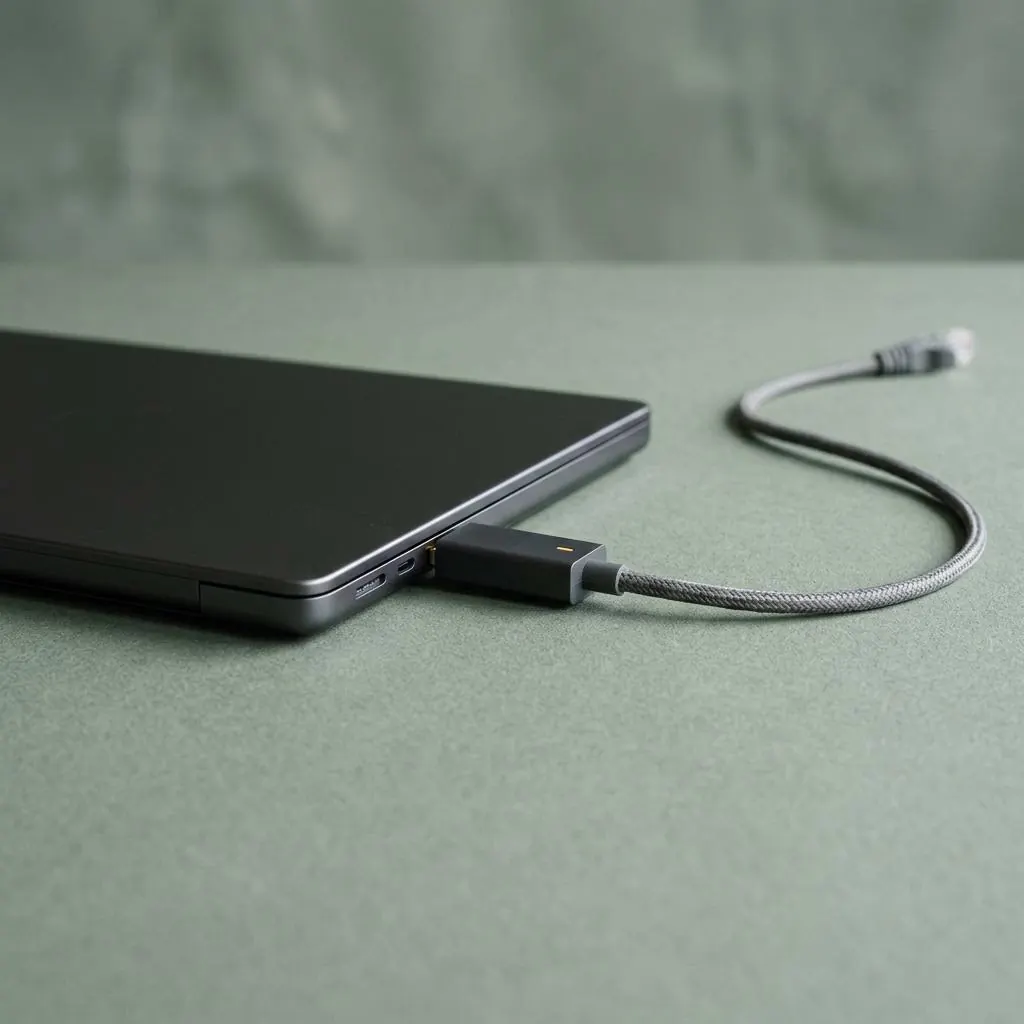
Adapter and interface are different objects
The adapter is a hardware or virtual function represented through a bus and driver relationship. The network interface is a host-software abstraction with identity, properties, and state. One adapter can have multiple representations over time or alongside virtual layers.
Laptop power adds another boundary
Internal adapters can participate in sleep, wake, radio, and platform-power relationships. Firmware and embedded controllers can contribute to those transitions, while a host driver exposes the adapter to the network stack. Power state is not interchangeable with package state.
Packets and link events have owners
A driver exchanges commands, data, and link events with an adapter. The network stack interprets packets above that boundary, while a wireless or wired medium supplies link conditions below it. A lifecycle page should state which layer owns each observation.
Package succession is recorded
Installation metadata, version fields, hardware identifiers, interface state, and runtime status can describe different points in the adapter’s lifecycle. A retained package record does not establish that it is active, and an interface state does not identify every package component.
Reference facts
- Objects
- Adapter, network interface, package, firmware, and link
- Laptop-specific context
- Power, wake, radio, and embedded-controller relationships
- Runtime boundary
- Driver connects network abstractions to adapter commands and data
Questions and answers
Is a network interface a physical adapter?
No. It is a host abstraction backed by a physical, integrated, or virtual adapter.
Does a power state identify a driver state?
No. Platform power and package or runtime selection are related but separate records.
Can one laptop have several network interfaces?
Yes. Integrated, external, virtual, and layered functions can each be represented separately.